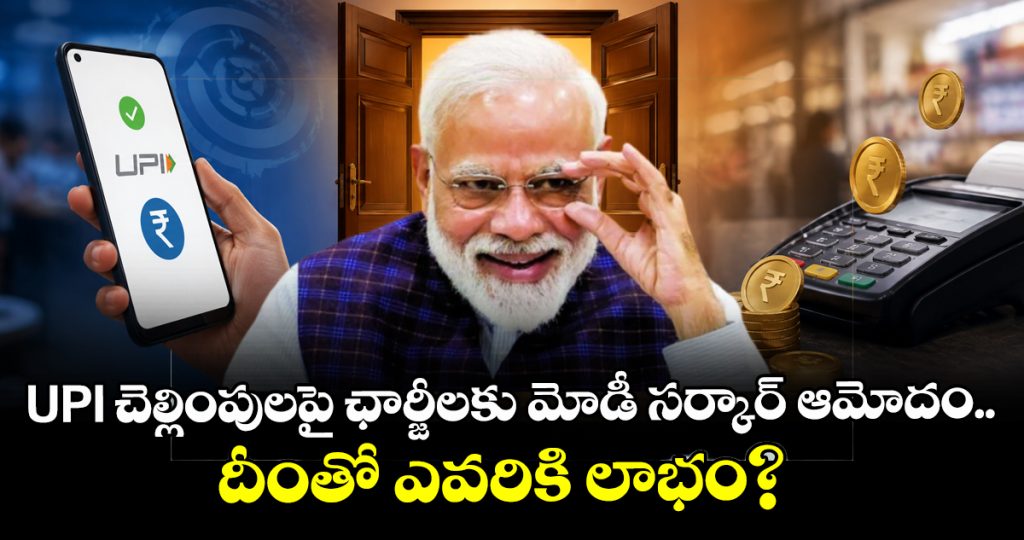
Modi Government Clears Path for UPI Merchant Discount Rate Charges
Indiabreakingdaily.com – India’s digital payment ecosystem is undergoing a historic transformation as the Modi government prepares to introduce merchant discount rate (MDR) charges on UPI చ ల ల ప లప transactions. The Unified Payments Interface, which has fundamentally changed how millions of Indians conduct daily financial transactions, will soon implement significant policy changes following parliamentary approval. The Payment and Settlement Systems (Amendment) Bill, 2027, recently received clearance in the Lok Sabha, establishing a framework for reintroducing MDR on select UPI చ ల ల ప లప payments. Consequently, certain digital payments that have remained free until now may incur indirect charges affecting both merchants and consumers.
Understanding the Rationale Behind MDR Reintroduction
Currently, India operates under a zero MDR framework for UPI చ ల ల ప లప payments, meaning banks and payment service providers receive no fees when merchants accept payments through the UPI platform. However, according to the Parliamentary Standing Committee, this arrangement has become a substantial financial burden for banks and payment companies responsible for maintaining the UPI infrastructure. The Modi government now envisions establishing a sustainable revenue model for the future of digital payments in India.
The Bill further amends the Payment and Settlement Systems Act, 2007, the Income-tax Act, 2025, and the Finance Act, 2026, creating a comprehensive legal framework for UPI చ ల ల ప లప charges.
Who Will Face the Charges?
Under the proposed legislation, ordinary consumers and small business owners need not worry about immediate financial impact. Based on available information, MDR implementation appears likely to target transactions exceeding ₹2,000 in value, particularly those involving large corporate entities and e-commerce platforms. Peer-to-peer money transfers and payments to tea shops, grocery stores, vegetable vendors, and auto drivers are expected to continue without charges, maintaining the status quo for everyday UPI చ ల ల ప లప transactions.
Beneficiaries of the New Policy
Should MDR return to operation, banks and digital payment organizations stand to gain substantial revenue from UPI చ ల ల ప లప ecosystem. State Bank of India, Bank of Baroda, HDFC Bank, Union Bank, and Punjab National Bank are anticipated to benefit significantly from the new charges. Notably, SBI alone could generate approximately ₹3,000 crore in additional annual revenue through the new UPI charges, strengthening their financial position.
Similarly, digital payment platforms such as PhonePe, Google Pay, and Paytm currently earn limited income from business UPI transactions. With MDR charges in effect, PhonePe and Paytm could each realize around ₹700 crore annually, while Google Pay might see nearly ₹500 crore in extra earnings. For more insights on digital payment trends, visit our Digital India updates section.
Impact on Consumers and Merchants
Consumers will not directly pay MDR charges; instead, merchants will bear this cost initially. Nevertheless, some business owners might offset the additional expense by increasing product prices, effectively transferring the burden to customers. Experts also suggest that certain merchants may begin demanding cash payments more frequently. If this trend materializes, Digital India could experience a regression toward physical cash transactions despite decades of digitalization efforts.
Industry specialists note that combining these new charges with existing GST and income tax obligations might discourage merchants from using UPI altogether. Once the Rajya Sabha grants its approval to the bill currently cleared by the Lok Sabha, the entire payment ecosystem will undergo meaningful changes affecting millions of daily transactions.
Frequently Asked Questions
When will UPI charges come into effect?
The exact implementation date depends on Rajya Sabha approval of the Payment and Settlement Systems (Amendment) Bill, 2027. Once both houses of parliament pass the legislation, the government will announce a timeline for MDR charges to begin on UPI చ ల ల ప లప transactions.
Will small merchants be affected by UPI charges?
Small merchants conducting transactions below ₹2,000 are likely to remain unaffected by the new MDR charges. The government has indicated that everyday transactions with local vendors, auto drivers, and small shop owners will continue without additional fees.
How much will UPI charges cost consumers?
While consumers won’t pay MDR directly, merchants may pass on costs through price increases. Industry estimates suggest minimal impact on individual consumers, with most additional costs absorbed by larger businesses and e-commerce platforms.
Which banks will benefit most from UPI charges?
Public sector banks like SBI, Bank of Baroda, and Union Bank are expected to gain the most revenue. Private banks including HDFC Bank will also see significant income growth from the renewed MDR framework on UPI చ ల ల ప లప payments.