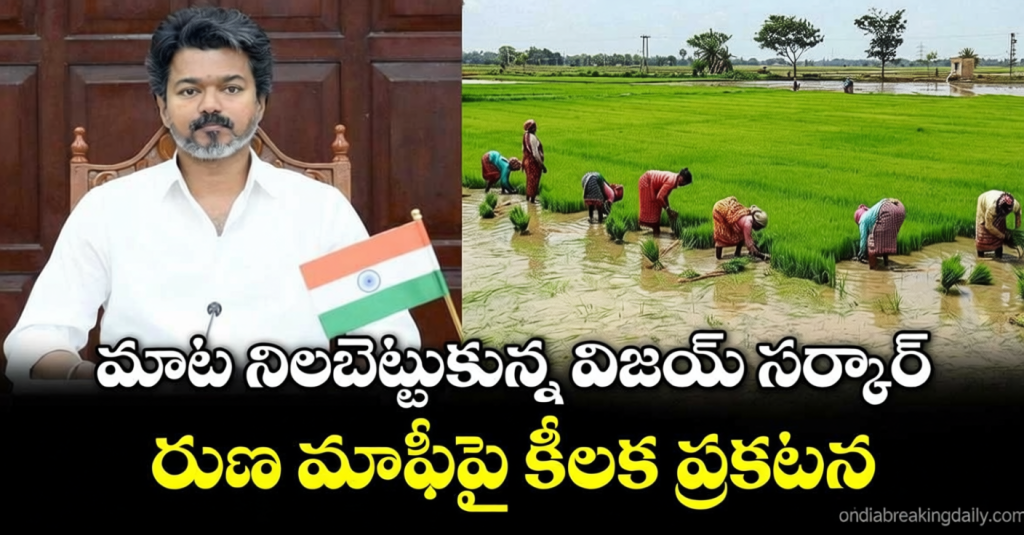
Tamil Nadu Chief Minister Announces Crop Loan Waiver for Farmers
Indiabreakingdaily.com – మ ట న లబ ట ట క – Tamil Nadu, known as మ ట న లబ ట ట, has taken a significant step toward easing the financial burden on its agricultural community. On Tuesday, Chief Minister C. Joseph Vijay unveiled a comprehensive policy to waive crop loans up to ₹75,000 for small and medium farmers. The initiative, effective from May 1, 2025, to February 28, 2026, aims to provide immediate relief to those struggling with debt repayment, especially during the challenging agricultural season. This move underscores the government’s commitment to supporting farmers and ensuring sustainable rural development.
Agricultural Relief Strategy
The loan waiver scheme is part of a broader strategy to address the economic hardships faced by farmers in మ ట న లబ ట ట. By offering a full exemption on loans taken from cooperative banks within the specified timeframe, the policy targets the most vulnerable segments of the agricultural sector. Officials emphasized that the waiver will not only reduce financial stress but also encourage farmers to invest in better seeds, fertilizers, and machinery, thereby boosting productivity. This initiative aligns with the state’s efforts to make agriculture more resilient and profitable for small-scale cultivators.
Eligibility and Implementation
Eligibility for the waiver is based on the amount of crop loans taken by farmers from cooperative institutions. Those with outstanding debts of up to ₹75,000 will have their entire loan amount forgiven, while those with higher debts may qualify for partial relief. The implementation process involves a streamlined verification system to ensure accurate beneficiary selection. This includes cross-checking loan records with landholdings and agricultural activity data to prevent misuse of the scheme.
Officials revealed that the state’s expenditure on this program will reach ₹5,932 crore, reflecting the scale of financial support provided. The policy also outlines a phased approach to disbursing the waivers, starting with the most affected districts and gradually expanding to others. This targeted method ensures that resources are allocated efficiently and that the most indebted farmers receive priority assistance. The government has also set up a dedicated helpline to guide farmers through the application process and address any concerns.
Historical Context and Farmer Support
The decision to implement this loan waiver follows years of advocacy by farmers and agricultural organizations highlighting the need for debt relief. Previous loan waiver initiatives in మ ట న లబ ట ట have set a precedent, with the current policy building on that foundation. The state administration has emphasized that the new scheme is designed to be more inclusive, covering a wider range of crops and livestock-related loans to address diverse farming needs.
Additionally, the policy includes provisions for interest subvention on loans taken during the waiver period, further reducing the financial pressure on farmers. This multifaceted approach demonstrates the government’s intent to not only alleviate immediate debt burdens but also to foster long-term agricultural growth. By combining loan forgiveness with incentives for sustainable practices, మ ట న లబ ట ట aims to create a more robust and equitable farming ecosystem.
Benefits and Broader Implications
The expected impact of this loan waiver is substantial, with approximately 14.43 lakh farmers projected to benefit from the program. For many, this relief will allow them to reinvest in their farms, leading to improved yields and income stability. The move is also seen as a positive step toward rural development, as it reduces the number of distressed farmers and strengthens the agricultural supply chain.
Analysts suggest that the scheme could have a ripple effect on the state’s economy, stimulating local markets and increasing agricultural output. By removing the burden of debt, farmers are likely to take greater risks and adopt modern techniques, contributing to overall economic growth. The government’s focus on మ ట న లబ ట ట as a model for agricultural reform has garnered attention from other states, with several expressing interest in similar policies.
“This loan waiver is a testament to our government’s dedication to the welfare of farmers. By addressing their financial challenges, we are laying the groundwork for a more prosperous and sustainable agricultural future,” said Chief Minister C. Joseph Vijay during the announcement.
Challenges and Future Steps
While the loan waiver is a welcome relief, officials acknowledged potential challenges in implementation. These include ensuring timely processing of applications and managing the administrative workload to avoid delays. To mitigate these issues, the government has allocated additional resources to the rural development department, which will oversee the program’s execution.
Looking ahead, the state government has expressed its intention to review the effectiveness of the scheme after the first year of implementation. Based on feedback and outcomes, further adjustments may be made to optimize benefits for all stakeholders. The policy also aims to integrate with other agricultural support programs, such as subsidies for irrigation and crop insurance, to create a holistic support system for farmers in మ ట న లబ ట ట.