Controversy Over NTR and Trivikram’s Film in Tamil Nadu Sparks Debate on Lord Murugan’s Origins
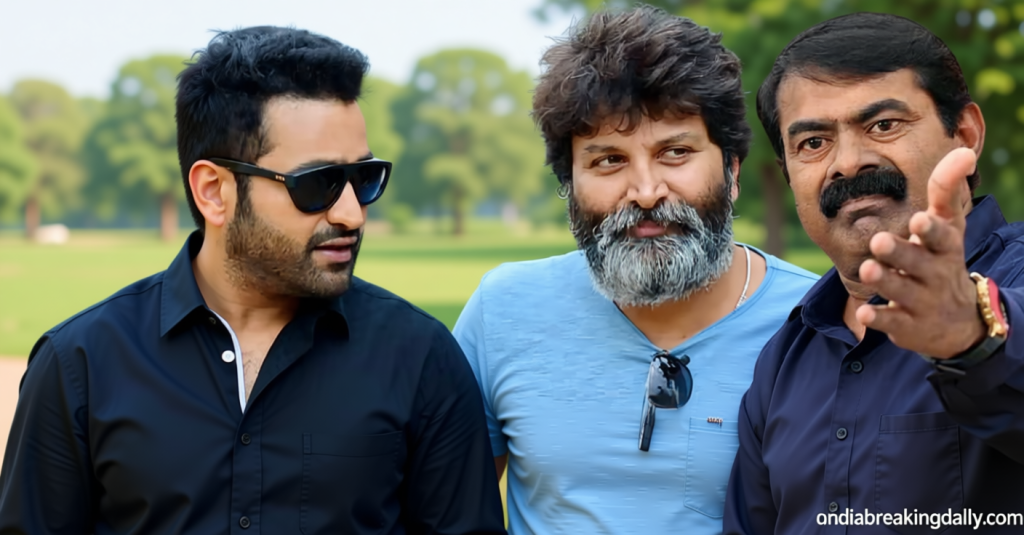
Indiabreakingdaily.com – ఎన ట ఆర త ర వ క – The release of a new film starring NTR (Nandamuri Taraka Rama Rao) and Trivikram Srinivas has ignited a heated controversy in Tamil Nadu, centering on the portrayal of Lord Murugan as a deity with northern origins. The film’s tagline, “Born in the North. Forged in the Heartland. Worshipped in the South,” has drawn sharp criticism from local devotees and cultural leaders, who argue that it undermines the sacred status of Murugan within Tamil traditions. NTR and Trivikram, both prominent figures in Telugu cinema, have been accused of sparking a regional divide by emphasizing the deity’s northern roots over its deep ties to Tamil Nadu’s spiritual heritage.
The Film’s Narrative and Its Cultural Impact
The movie’s plot, which traces the story of Lord Murugan from northern mythology to southern worship, has sparked debates about how religious narratives are shaped for modern audiences. While the film draws from ancient Hindu texts, its focus on the deity’s northern birthplace—Rudraprayag in Uttarakhand—has been seen as a challenge to the traditional view that Murugan is uniquely associated with Tamil Nadu. This shift in emphasis has raised concerns among local communities, who fear it could erode the cultural pride tied to the deity’s presence in southern temples and festivals.
“The film’s portrayal of Lord Murugan as a northern deity has upset Tamil Nadu’s devotees, who consider him a central figure of their identity. If this narrative continues, it may fuel tensions between regions and weaken the cultural significance of the deity in our state,” stated Semman, a leader of the NTK Party, during a recent address.
The controversy has also brought attention to the broader issue of how regional cultural narratives are perceived in national and global contexts. Murugan, or Subrahmanya Swami, is revered in Tamil Nadu as a symbol of valor and devotion, with his birthplace and sacred sites like Tiruchendur deeply embedded in local traditions. The film’s creative team, however, has opted to highlight his northern origins, a choice that some argue risks overshadowing the deity’s role in Tamil Nadu’s spiritual and cultural landscape.
Regional Tensions and the Role of Media
The debate has intensified with the release of the film’s poster, which visually reinforces the north-south divide in the deity’s story. Social media platforms have become battlegrounds for opinions, with Tamil Nadu residents expressing outrage over the depiction. Some argue that the film’s focus on northern roots is a subtle attempt to assert a pan-Indian narrative, while others see it as a cultural erasure. The NTK Party has called for a review of the film’s content, warning that it could lead to widespread agitation if not corrected.
Meanwhile, the film’s producers have defended their creative choices, stating that they aim to present a more inclusive and historically accurate version of the deity’s mythology. They emphasized that Lord Murugan’s story spans multiple regions and that the film’s tagline reflects his journey from northern origins to southern worship. This explanation has not fully quelled the backlash, as critics argue that the narrative prioritizes a northern perspective over the deity’s sacred status in Tamil Nadu.
The controversy underscores the sensitivity of blending mythological stories with contemporary storytelling. Tamil Nadu’s deep connection to Murugan is not just religious but also deeply intertwined with its history, literature, and art. The film’s focus on the deity’s northern roots has been interpreted as a challenge to this identity, with some fearing it could weaken the cultural bonds between the state and its revered deities. As the film approaches its release, the debate is expected to intensify, with stakeholders from both regions weighing in on the issue.
Further fueling the debate is the historical context of Lord Murugan’s worship. While the northern tradition attributes his birth to Rudraprayag, Tamil Nadu’s followers believe he was born in the south, with the temple in Tiruchendur being a key site of his legend. The film’s tagline, which frames the deity’s journey from north to south, has been criticized for simplifying this complex mythology and ignoring the regional pride associated with the deity’s southern origins. This has led to calls for more nuanced storytelling that respects both traditions without sidelining Tamil Nadu’s cultural narrative.
As the film’s release date draws near, the situation remains volatile. The NTK Party has urged the government to take action, suggesting that the film’s portrayal of Murugan could threaten the state’s cultural unity. On the other hand, supporters of the film argue that it highlights the interconnectedness of Hindu traditions across regions and could foster a broader understanding of the deity’s universal significance. The discussion now centers on whether the film will be seen as a cultural milestone or a divisive force in Tamil Nadu’s religious and social fabric.
Regardless of the outcome, the film has sparked a wider conversation about how regional identities are represented in mainstream media. The NTR and Trivikram duo, known for their popular films, has once again demonstrated the power of cinema to influence cultural perceptions. As debates continue, the film’s impact on Tamil Nadu’s religious sentiments and its role in shaping the north-south narrative will remain key topics of discussion in the days to come.