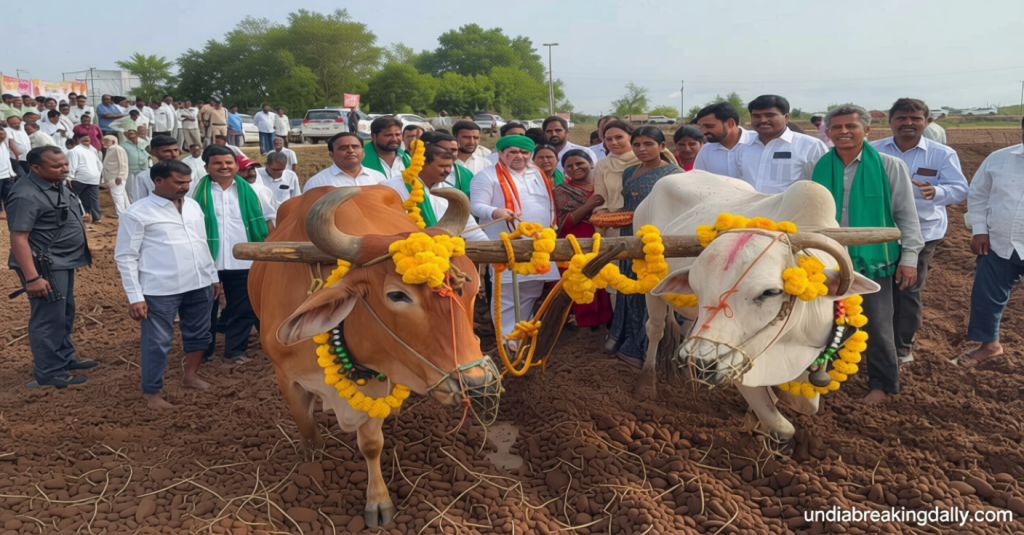
Minister Ponnam Prabhakar Marks Eruvaka Pournami with Farmers
Indiabreakingdaily.com – ఏర వ క ప ర ణమ ర – During the annual Eruvaka Pournami ceremony in Koorerallu, Siddipeta district, Kuhed Mandalam, Minister Ponnam Prabhakar actively participated in the traditional event, which symbolizes the beginning of the agricultural season. This sacred occasion, deeply rooted in local farming culture, was marked by the minister personally plowing the land and sowing seeds alongside community farmers, showcasing his dedication to rural development. The ceremony, which has been celebrated for generations, not only honors the fertility of the soil but also serves as a platform to connect policymakers with the challenges faced by agricultural laborers. By immersing himself in the daily tasks of farmers, Ponnam Prabhakar emphasized the importance of traditional practices in sustaining productivity, especially as modern farming techniques continue to evolve.
The Historical and Cultural Significance of Eruvaka Pournami
Eruvaka Pournami, also known as the “Full Moon of Eruvaka,” is a time-honored festival that holds profound cultural and agricultural significance in the region. Farmers believe that the lunar cycle’s alignment with the harvest season brings auspicious energy to the land, ensuring bountiful yields. This year’s ceremony, however, took on added importance due to the ongoing effects of climate change, which have disrupted weather patterns and created uncertainty for crop cycles. Ponnam Prabhakar highlighted how the festival acts as a reminder of the resilience required in agriculture, urging farmers to adapt to environmental challenges while preserving age-old traditions. The event also provided an opportunity to discuss climate-resilient farming strategies, ensuring that the community remains prepared for unpredictable seasons.
The minister’s involvement in the plowing ritual was a powerful statement of solidarity with the farming community. As he worked alongside local cultivators, he acknowledged the vital role of their labor in the state’s economy. “The Eruvaka Pournami is more than a ritual—it is the heartbeat of our agricultural calendar,” he said. This sentiment resonated with attendees, who saw the minister’s presence as a testament to the government’s commitment to rural welfare. The ceremony also featured discussions on the allocation of resources, with Ponnam Prabhakar assuring that agricultural subsidies and support programs would be streamlined to address the needs of small and marginal farmers. Such initiatives aim to reduce the financial strain of starting the planting season, particularly in areas affected by erratic monsoons.
“Eruvaka Pournami signifies the start of the agricultural cycle. This season, abundant rains have created ideal conditions for crops to thrive without pests or insects disrupting the harvest,” said Ponnam Prabhakar. His words were met with enthusiastic applause, underscoring the collective hope for a favorable growing season. The minister’s hands-on approach during the event reinforced the message that policymakers must remain closely connected to the realities of farming. By engaging directly with the community, he not only highlighted the cultural importance of the festival but also emphasized the need for proactive measures to safeguard agricultural output in the face of climate unpredictability.
Minister’s Commitment to Farmer Support
Following the Eruvaka Pournami ritual, Ponnam Prabhakar addressed a gathering of farmers, agricultural officials, and local leaders to outline his vision for the sector. He reiterated the government’s focus on improving infrastructure, providing better access to credit, and promoting sustainable practices. “Our goal is to ensure that every farmer has the tools they need to succeed, whether it’s through modern technology or traditional wisdom,” he stated. The minister also announced plans to launch a new initiative targeting the distribution of drought-resistant seeds, a critical move given the increasing frequency of dry spells in the region. By aligning his policies with the realities of climate change, Ponnam Prabhakar aims to bolster the agricultural sector’s ability to withstand adverse conditions while maintaining productivity.
The Eruvaka Pournami event was not just a symbolic gesture but a practical step towards addressing the immediate needs of farmers. Ponnam Prabhakar’s decision to personally plow the land and sow seeds sent a clear message of empathy and engagement. He encouraged young farmers to participate in the tradition, highlighting its role in preserving cultural heritage and fostering a sense of community. Additionally, the minister emphasized the importance of education in agriculture, proposing workshops to teach sustainable practices and efficient resource management. These efforts are part of a broader strategy to make farming more resilient and profitable, ensuring that it remains a viable livelihood for future generations. As the ceremony concluded, the minister’s presence inspired renewed optimism among the attendees, who saw it as a sign of renewed government support for their sector.
In a country where agriculture is the backbone of the economy, events like Eruvaka Pournami play a crucial role in uniting stakeholders and reaffirming commitments. Ponnam Prabhakar’s participation in the ceremony has already sparked conversations about the need for more such grassroots engagements. The minister’s focus on the event reflects his understanding that effective agricultural policy must be informed by the lived experiences of farmers. By fostering direct interaction, he bridges the gap between governance and practical farming needs, ensuring that decisions are both informed and inclusive. This approach not only strengthens public trust but also positions the minister as a leader who prioritizes the well-being of rural communities. The Eruvaka Pournami, therefore, stands as a vital moment in the broader narrative of agricultural development, offering hope and a renewed sense of purpose to those who depend on the land for their sustenance.