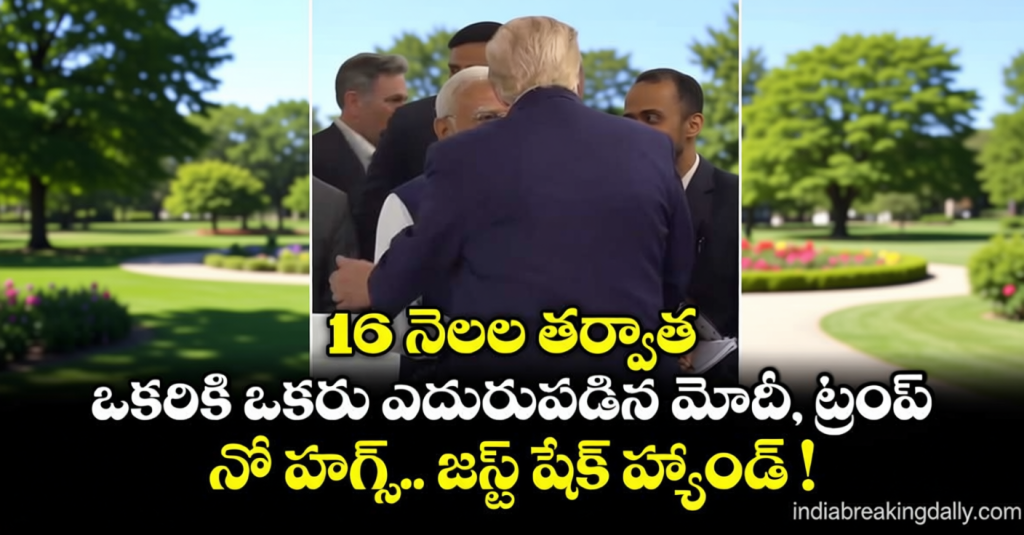
Modi and Trump Meet After 16 Months: No Hugs, Just Handshakes
Indiabreakingdaily.com – At the recent G7 summit in France, Prime Minister Narendra Modi and US President Donald Trump’s meeting after a 16-month absence sparked global interest. Their brief interaction, marked by a formal handshake rather than the customary warm embrace, captured attention from international media and social platforms. The moment became a symbol of shifting dynamics in their relationship, reflecting the complex interplay of political priorities and diplomatic strategies between India and the United States. This encounter, though short, carried weight, underscoring the significance of maintaining ties despite evolving challenges.
Context of the G7 Summit and the Leaders’ Meeting
Hosted in Evian, France, the G7 summit brought together world leaders to discuss pressing global issues such as economic recovery, climate change, and international security. Modi’s and Trump’s participation highlighted the importance of their bilateral relationship, which had been on hold for over a year. The meeting, though brief, was carefully timed to signal a renewed focus on collaboration in key areas like trade, technology, and regional stability. Analysts noted that the absence of a hug, a common feature in their earlier interactions, hinted at a more cautious approach in their current engagement.
The 16-month gap between their last meeting in 2019 and this one in 2020 raised questions about the evolving nature of their partnership. During the summit, both leaders were seen exchanging pleasantries and discussing trade agreements, but the lack of physical warmth between them stood out. This contrast with their previous interactions, where hugs were a frequent display of camaraderie, suggested a shift in their diplomatic style. The event also served as a platform for addressing joint concerns, including economic reforms and counterterrorism efforts.
Reasons Behind the Formal Greeting
Experts attributed the change in greeting to the growing tensions between India and the United States on several fronts. While the two nations had shared a strong alliance in recent years, differences in trade policies, particularly the imposition of tariffs on Indian goods, created friction. Additionally, the aftermath of the Iran-Iraq war, which had simmered for decades, influenced their strategic alignment. India’s strategic partnership with Iran, amid ongoing US sanctions, and the unresolved issues between Pakistan and India further complicated their relationship during this period.
“The shift in their greeting reflects a more pragmatic and less emotionally driven approach to diplomacy,” remarked a political analyst. “Both leaders are now prioritizing policy outcomes over symbolic gestures.”
This sentiment was echoed in media reports, which highlighted how the 16-month hiatus allowed for recalibration of their working relationship. The handshake, a common diplomatic practice, was seen as a compromise between the informal warmth of past meetings and the need for a more measured tone in addressing bilateral and multilateral challenges.
As the G7 summit progressed, Modi and Trump engaged in discussions on trade, energy, and defense cooperation. Their meeting emphasized the importance of sustained dialogue in maintaining India’s strategic position in the global arena. Despite the 16-month gap, the leaders managed to rekindle their partnership, focusing on shared goals such as economic growth and geopolitical stability. The event also provided an opportunity to address India’s aspirations in the Indo-Pacific region and the US’s broader interests in strengthening ties with emerging economies.
International observers noted that the meeting after 16 months was a strategic move to bridge gaps and reinforce collaboration. The formal handshake, while less personal, underscored the professionalism of their interaction. As both nations navigated domestic and international challenges, their meeting served as a reminder of the resilience of their alliance. The G7 summit, therefore, became a pivotal moment in redefining their diplomatic engagement, with the 16-month gap playing a crucial role in shaping the tone of their renewed partnership.