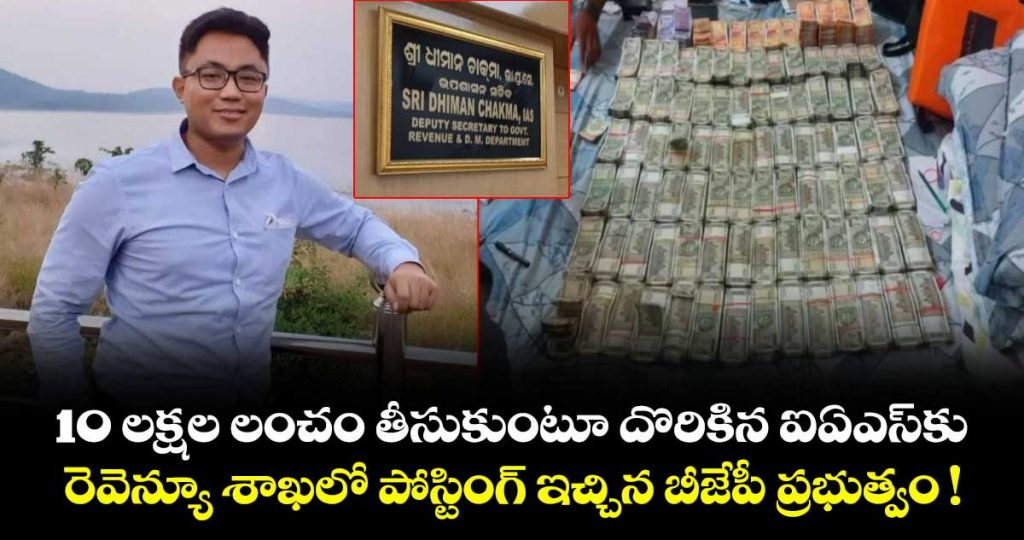
IAS Officer Dhiman Chakma Reinstated as Deputy Secretary Amid 10 Lakh Bribe Controversy
Indiabreakingdaily.com – In a recent development, IAS officer Dhiman Chakma, who was implicated in a 10 lakh bribe case, has been reinstated as a Deputy Secretary in the Revenue Department by the Odisha BJP government. The official announcement, made on May 21, 2026, through government notifications, has reignited debates about corruption within the bureaucracy. Chakma, a prominent figure in the administrative system, was initially suspended following allegations of accepting a 10 lakh bribe from a stone crusher owner. This incident has raised questions about the government’s approach to accountability and its readiness to address corruption at the highest levels.
The Bribe Case and Its Fallout
The 10 lakh bribe case against Chakma emerged during a routine audit of revenue department operations. According to official sources, the officer was apprehended at his Dharmagad residence while receiving the funds. The total amount seized during the investigation included 47 lakh rupees in cash, along with various documents and electronic devices. The case was initially dismissed as a minor administrative lapse, but it quickly escalated into a major scandal as media outlets and public figures scrutinized the circumstances surrounding the bribe.
Even after enduring the arduous process of preparing for civil services, some IAS officers end up losing the value of their struggle due to the greed of a few.
The allegations highlight the stark contrast between the aspirational ethos of the IAS exam and the reality of corruption in governance. Chakma’s suspension was a swift response, but the decision to reinstate him has sparked controversy. Critics argue that the 10 lakh bribe case was downplayed to protect political interests, while supporters contend that the officer’s rehabilitation reflects a balanced approach to justice and administrative efficiency.
Government’s Decision and Its Implications
The Odisha BJP government’s reinstatement of Chakma as Deputy Secretary has drawn mixed reactions. Proponents of the move emphasize the importance of retaining experienced officials, stating that the 10 lakh bribe case was a one-time incident and should not define his entire career. They argue that the officer’s contributions to public administration outweigh the allegations, particularly in a sector as critical as revenue management.
On the other hand, detractors accuse the government of prioritizing political loyalty over integrity. They question the rationale behind placing an officer involved in a 10 lakh bribe case in a key position, pointing out that the revenue department oversees land records, tax collection, and revenue generation—areas where corruption can have significant economic and social impacts. The reinstatement has also prompted discussions about the transparency of the disciplinary process and the role of political affiliations in administrative decisions.
Chakma’s case is emblematic of a broader issue: how to reconcile the need for a stable bureaucracy with the imperative to combat corruption. The government’s decision to reinstate him underscores the complexity of balancing accountability with the continuity of public services. As the 10 lakh bribe case unfolds, it remains a focal point for debates on governance, ethics, and the future of the IAS cadre in Odisha.
Analysts note that the case has amplified scrutiny of the Odisha government’s handling of corruption. With the 10 lakh bribe case at the center of attention, stakeholders are calling for stricter measures to prevent similar incidents. The reinstatement of Chakma has been seen by some as a strategic move to consolidate control over the revenue department, which plays a pivotal role in state finances. However, others warn that such decisions may embolden corrupt practices and undermine public trust in the IAS system.
Public reactions have been divided, with social media platforms witnessing a surge in discussions about the 10 lakh bribe case. While some netizens support the government’s decision, citing Chakma’s proven track record, others condemn it as a betrayal of the IAS profession. The controversy has also extended to political circles, with opposition parties criticizing the move as a cover-up for systemic graft. As the case continues to evolve, the 10 lakh bribe scandal is likely to remain a topic of national interest, influencing perceptions of governance and accountability in India.