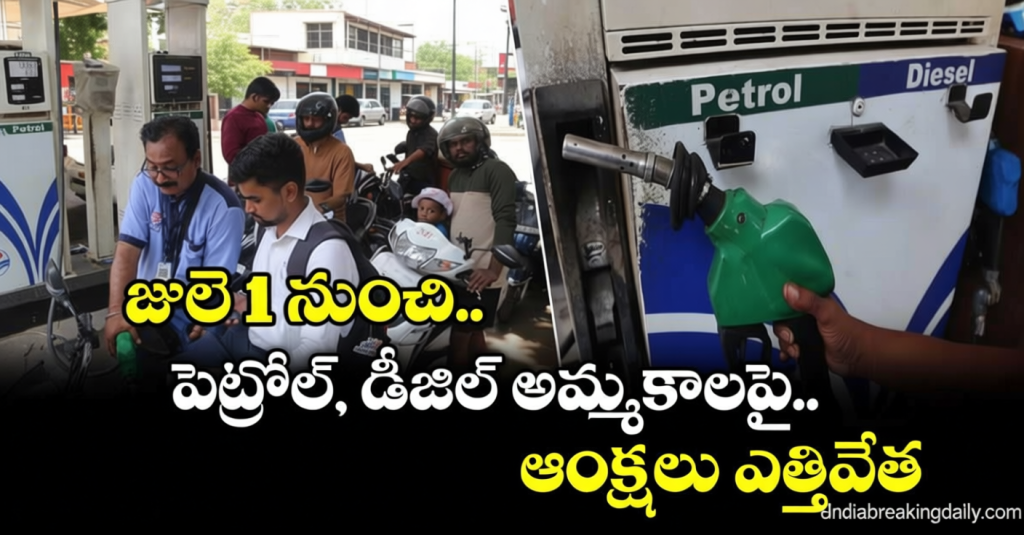
Central Government Lifts Restrictions on Petrol and Diesel Sales Effective July 1
Indiabreakingdaily.com – The Central Government of India has made a significant announcement regarding the resumption of unrestricted petrol and diesel sales from July 1, 2026, marking a pivotal shift in its approach to managing petroleum product distribution. This decision, which directly addresses the focus keyword జ ల 1 న చ ప, comes after a thorough assessment of the country’s energy supply dynamics. Officials confirmed that the temporary measures, which had been in place since June 12, 2026, will be lifted, allowing retail outlets operated by public sector oil companies such as IOCL, BPCL, and HPCL to resume normal operations. The change aims to ease logistical pressures and ensure a steady flow of fuel to consumers, who had faced periodic shortages due to supply chain disruptions.
Reasons Behind the Policy Adjustment
The decision to lift restrictions was driven by the government’s evaluation of the supply chain’s resilience. Earlier, the Petroleum Ministry had imposed stringent rules, requiring petrol and diesel to be dispensed in large containers at retail stations to mitigate the risk of shortages. This measure was initially introduced in response to the closure of the Hormuz Strait, a critical chokepoint for global oil trade, due to geopolitical tensions in the Middle East. The disruptions caused supply bottlenecks, prompting the government to implement temporary controls to prioritize bulk sales and stabilize prices. However, as the situation in the Hormuz Strait improved and domestic production met demand, the need for these restrictions diminished.
With the lifting of the జ ల 1 న చ ప policy, the government has signaled its confidence in the stability of the petroleum market. This move is expected to benefit both consumers and commercial entities, as it eliminates the need for pre-booking or large-scale bulk purchases. The shift also aligns with the administration’s broader goal of enhancing fuel accessibility across the nation, particularly in rural and semi-urban areas where supply chains are more vulnerable. By reinstating full retail sales, the government aims to reduce operational complexities for fuel stations and streamline the distribution process.
Impact on Consumers and the Economy
The removal of restrictions on petrol and diesel sales from July 1 is anticipated to have a positive impact on the economy and daily life. Consumers will now have greater flexibility in refueling their vehicles without the constraints of previous regulations. This change is likely to ease the burden on both individual and commercial users, who had to navigate additional hurdles in accessing fuel. For instance, businesses reliant on transportation will benefit from smoother operations, while drivers can refuel more conveniently without the need for advance planning.
From an economic perspective, the policy adjustment is expected to stimulate activity in the fuel retail sector. Public sector oil companies, which had previously operated under tight guidelines, will now be able to optimize their inventory management and pricing strategies. Analysts suggest that this decision could also support the growth of private sector players, who had been operating under secondary restrictions. By creating a more balanced and accessible market, the government hopes to foster competition and efficiency, ultimately leading to better services for the public.
Government’s Stance and Future Outlook
In a statement released on June 30, 2026, the Petroleum Ministry emphasized that the removal of restrictions is a strategic step to ensure seamless fuel distribution. The ministry highlighted that the decision was based on a combination of improved supply chain efficiency and the successful resolution of external disruptions. While the temporary measures were necessary during the crisis, the government now believes that the market is strong enough to handle demand without intervention. This marks a turning point for the sector, as it transitions from crisis management to normal operations.
Looking ahead, the government has indicated that it will closely monitor the market to prevent any potential shortages in the future. This includes ongoing assessments of global oil prices, domestic production levels, and logistical bottlenecks. The lifting of the జ ల 1 న చ ప policy also opens the door for further reforms in the energy sector, such as the integration of digital payment systems and the expansion of retail networks. These steps are part of a larger effort to modernize the industry and align it with contemporary consumer expectations.
As the new policy takes effect, industry experts and consumers alike are expressing optimism. The streamlined process for petrol and diesel sales is expected to reduce wait times at fuel stations and improve overall customer satisfaction. Additionally, the decision reinforces the government’s commitment to maintaining energy security while ensuring economic growth. With the జ ల 1 న చ ప measures lifted, the nation is on track to return to a more efficient and consumer-friendly fuel distribution system.