Why the Education Minister Shouldn’t Write a Resignation Letter: TMC MP Criticizes His Handling of the NEET Paper Leak
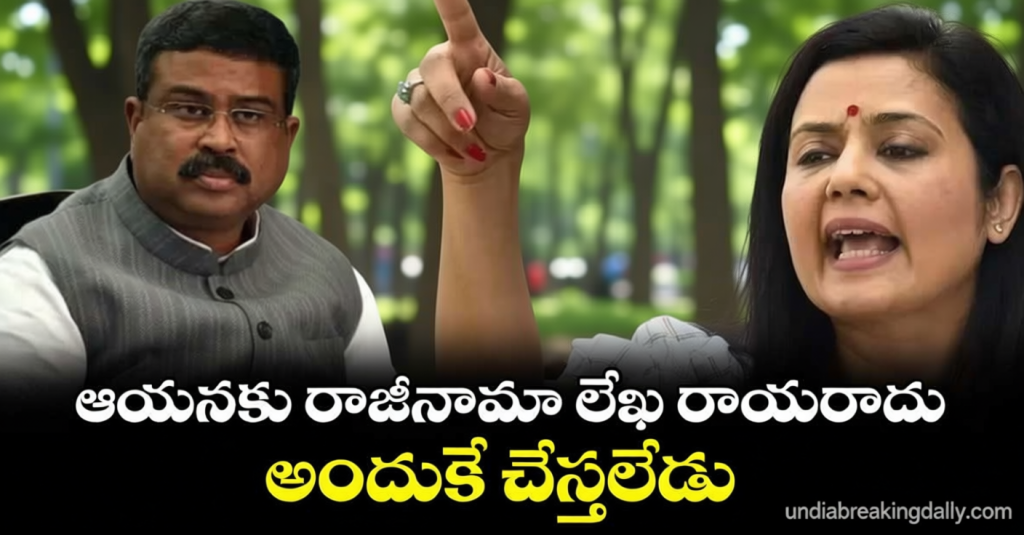
Indiabreakingdaily.com – ఆయనక ర జ న మ ల ఖ – The recent controversy surrounding the NEET exam paper leak has sparked intense public debate, with many demanding accountability from the Education Minister, Dharmendra Pradhan. However, a prominent Trinamool Congress MP, Mahuva Moyittra, has argued that the minister doesn’t need to submit a resignation letter. In a fiery speech on July 21, she questioned the urgency of such a move, suggesting that the minister’s refusal to resign reflects his confidence in the current situation and his ability to manage the crisis without stepping down.
The NEET Leak Crisis and Public Outcry
The NEET exam, a critical component of India’s competitive education system, was recently marred by allegations of paper leakage, leaving thousands of students in a state of frustration and disappointment. As the controversy escalated, youth groups and student organizations intensified their protests, calling for the immediate resignation of the minister responsible for the exam. Moyittra, however, challenged this narrative, asserting that a resignation letter is not a necessary solution. She emphasized that the minister’s actions—rather than a written resignation—should be the focus of public scrutiny, arguing that the decision to stay in office is tied to his perceived competence in addressing the issue.
“Maybe just maybe the Education Minister doesn’t know how to write a letter of resignation… RSS only teaches you how to write mercy petitions,” Moyittra remarked, underscoring the criticism against the minister’s response to the controversy. Her statement highlighted a growing divide between the minister’s approach and the expectations of the youth, who feel the need for a more decisive and transparent action.
The minister’s handling of the NEET paper leak has drawn sharp criticism from various quarters, with critics pointing to his reluctance to acknowledge fault or take immediate steps to rectify the situation. While some argue that the minister’s decisions were influenced by political considerations, Moyittra’s comments suggest that the public is increasingly questioning his readiness to accept responsibility. She pointed out that the minister’s focus on mercy petitions—requests for leniency from those affected—may be a tactic to avoid the more significant implications of a resignation, such as losing political authority or facing public backlash.
Political Dynamics and the Role of Meritocracy
Moyittra’s critique of the minister’s stance is part of a broader political discussion on accountability and leadership. She accused the minister of prioritizing political survival over public service, implying that the resignation letter is a symbolic gesture rather than a substantive solution. “ఆయనకు రాజీనామా లేఖ రాయరాదు” became a rallying cry among students, who feel that the minister’s inaction undermines the principles of meritocracy central to the NEET exam.
The debate has also brought to light the tension between bureaucratic procedures and public demand for immediate results. While the minister’s team may argue that the leak investigation is ongoing and a resignation would be premature, Moyittra’s remarks suggest that the public’s patience is wearing thin. Her comments reflect a common sentiment that leaders should be held accountable for their decisions, even if those decisions are not immediately flawed. The resignation letter, in this context, serves as a symbol of commitment to resolving the crisis rather than evading it.
Meanwhile, the incident has raised concerns about the integrity of the NEET exam and the role of the minister in maintaining it. Reports indicate that the leak could have affected thousands of candidates, with some arguing that the minister’s response has been inadequate. As the protests continue, the situation is forcing the government to address not only the immediate issue but also the long-term implications for student confidence in the examination system. The focus keyword, “ఆయనకు రాజీనామా లేఖ రాయరాదు,” is now being used as a focal point in discussions about whether the minister’s role is secure or under threat.