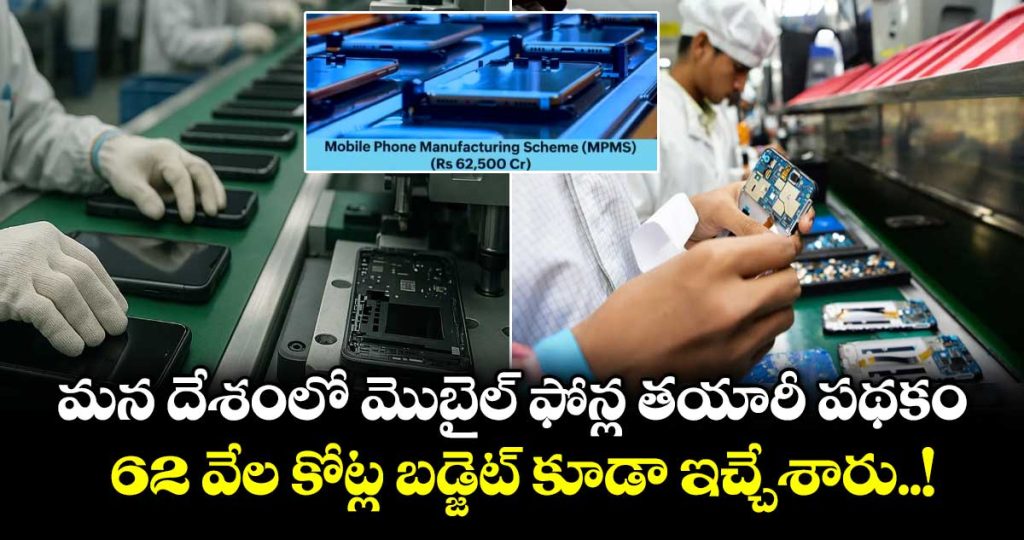
Union Cabinet Approves Second Phase of Mobile Phone Manufacturing Scheme with ₹62,500 Crore Allocation
Indiabreakingdaily.com – మన ద శ ల మ బ ల – Our country’s mobile phone manufacturing sector has received a significant boost as the Union Cabinet cleared the second phase of the Mobile Phone Manufacturing Scheme (MPMS), allocating ₹62,500 crore over the next five years. This decision, made during a Cabinet meeting led by Prime Minister Narendra Modi in Delhi, underscores the government’s commitment to reducing reliance on foreign imports and fostering self-sufficiency in electronics production. The expanded initiative aims to strengthen domestic manufacturing capabilities and position India as a global player in the smartphone industry.
Phase Details and Expansion Objectives
The second phase of the MPMS is designed to build on the successes of the first phase, which saw increased production capacity and reduced import dependency. By allocating ₹62,500 crore, the government is addressing the need to diversify supply chains and promote innovation within our country’s mobile phone manufacturing ecosystem. This move comes at a time when India has become a major consumer of smartphones, with domestic demand growing rapidly. The scheme seeks to tap into this potential by encouraging investments in design, research, and development, ensuring that Indian brands can compete globally.
Key Incentives and Job Creation Targets
Under the second phase, the government has introduced a range of incentives to support our country’s mobile phone manufacturing industry. These include tax benefits for raw material procurement, with rates ranging from 2.25% to 5%, as well as an additional 1.5% boost for critical components and sub-assemblies sourced domestically. Such measures are expected to lower production costs and attract more manufacturers to set up operations in India. Furthermore, the scheme targets the creation of approximately 60,000 direct jobs, providing employment opportunities across various sectors, from engineering to logistics. This not only helps in reducing unemployment but also enhances the skill base of the workforce involved in our country’s mobile phone manufacturing.
By promoting localized production, the MPMS aims to make India a key hub for smartphone manufacturing, which currently accounts for a significant portion of the global market. The initiative encourages companies to establish manufacturing units within the country, ensuring that a larger share of the value chain is controlled by Indian firms. This strategic shift is crucial for our country’s mobile phone manufacturing industry, as it reduces the carbon footprint associated with international shipping and supports the “Make in India” campaign. The government has emphasized that the scheme will be implemented in phases, with the first phase already demonstrating measurable progress in increasing domestic output.
Experts believe that the second phase of the MPMS will further solidify India’s position as a preferred destination for mobile phone manufacturing. With a budget of ₹62,500 crore, the government is investing heavily in infrastructure, technology, and human resources to create a sustainable ecosystem. The scheme also includes provisions for training programs and partnerships with international technology firms, which will help transfer knowledge and expertise to our country’s mobile phone manufacturing sector. By fostering collaboration between local and global players, India aims to achieve a balance between innovation and affordability, ensuring that consumers benefit from competitively priced, high-quality smartphones.
The long-term goal of the MPMS is to create a self-reliant electronics manufacturing industry, which is essential for our country’s mobile phone manufacturing ambitions. With the new allocation, the government is not only addressing immediate production needs but also laying the groundwork for future growth. This initiative aligns with India’s broader economic strategy to reduce trade deficits and increase exports. As the mobile phone manufacturing sector expands, it will contribute to the overall GDP and create a ripple effect across related industries. The success of this scheme will depend on effective implementation, continuous support for R&D, and the ability to meet global standards while catering to local market demands.